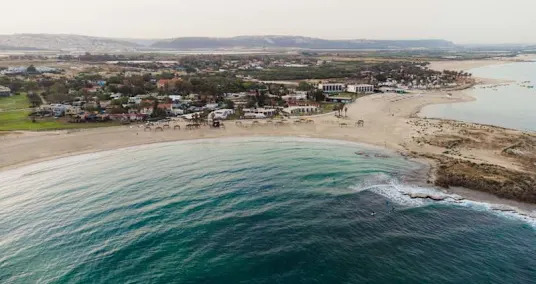
The discovery was made in an ancient shipwreck in the Dor Lagoon near the Carmel Coast, where archaeologists recovered nine pieces of unprocessed iron known as “blooms.”
Researchers from the University of Haifa said Wednesday that an underwater excavation off Israel’s northern Mediterranean coast uncovered what they described as the earliest known cargo of raw iron transported by ship, dating back around 2,600 years, Xinhua reported.
The discovery was made in an ancient shipwreck in the Dor Lagoon near the Carmel Coast, where archaeologists recovered nine pieces of unprocessed iron known as “blooms.” According to the university, the find provides direct evidence of how iron was transported in its earliest commercial stages.
The material was preserved in its original form, having solidified directly in a smelting furnace without undergoing forging or further refinement. Researchers said this distinguishes the cargo from later iron artifacts that typically show signs of shaping or tool-making.
Unlike copper and bronze, which could be melted into liquid form in ancient production processes, iron was heated with charcoal to produce a solid, porous mass. That mass was generally hammered to remove impurities and create denser material suitable for tools and implements.
The recovered blooms showed no indication of that secondary processing stage, suggesting they were transported immediately after production.

Earliest iron shipment discovered in ancient Mediterranean wreck
To determine the age and condition of the cargo, researchers conducted microscopic and chemical analyses.
Radiocarbon dating was also carried out on charred wood embedded in one of the pieces, helping confirm the timeline of the shipment. The findings were published in the journal Heritage Science.
Researchers said the cargo indicates that iron was being moved in raw form from production sites to other locations for further processing, pointing to a level of specialization in ancient manufacturing and trade networks in the Mediterranean.
The University of Haifa said the discovery provides new insight into early iron production and distribution practices in the region.
latest_posts
- 1
 Barry Manilow reveals lung cancer diagnosis and plans to undergo surgery: 'It's pure luck' it was 'found so early'
 - 2Eat Well, Live Well: An Extensive Manual for Smart dieting and Sustenance
- 3It Looks Like a Tiny, Fluffy Dragon, But It's Really a Bird. Meet the Great Eared Nightjar
- 4Two Endangered Bengal Tiger Cubs Die Days Apart at Zoo After Contracting Virus
- 5IDF: Staying in West Bank refugee camps will quell lone-wolf terror




- Why most Jewish Israelis back the death penalty for terrorists
- Figure out How to Explore Your Direction to the Best Dental Embed Trained professional: A Far reaching Manual
- Italy Brings In New Measures In 2026 To Tackle Overtourism
- Gym tied to outbreak of obscure disease that spreads through mist
- Iran, Hezbollah fire rockets at Israel during Passover celebrations
- NASA’s Artemis II launch leaves Americans in awe: ‘We’re going to the frickin’ moon!’
- Drones, physics and rats: Studies show how the people of Rapa Nui made and moved the giant statues – and what caused the island’s deforestation
- This Week In Space podcast: Episode 186 — Snow on the Moon?
- Savvy Watches: Which One Is Appropriate for You?